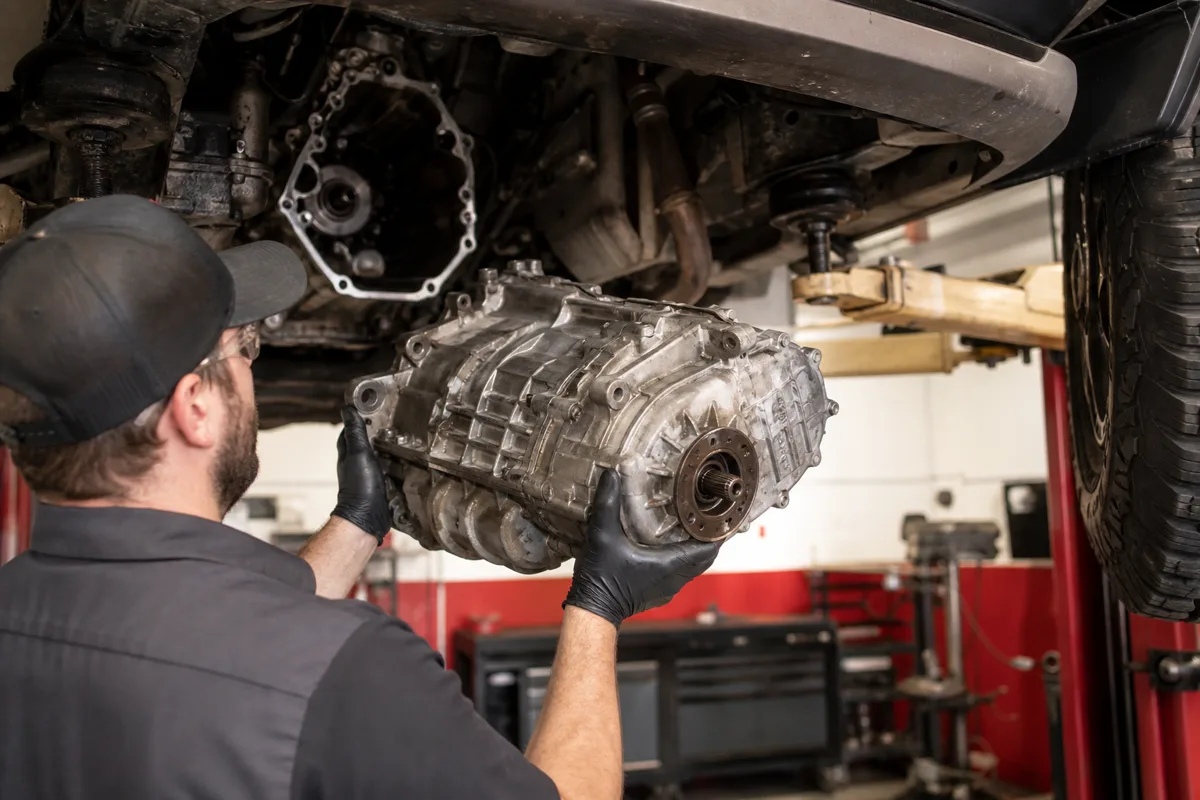
A transfer case pan leak is one of the most common reasons four-wheel-drive vehicles return to the shop within weeks of a seal job. In most cases, the gasket was replaced — but the conditions that caused the original failure were never corrected.
Why Gasket-Only Repairs Fail
Transfer case pans seal against machined aluminum or composite surfaces that corrode, pit, and warp under heat cycling. Installing a new gasket over a compromised surface creates micro-pathways for fluid to escape under pressure and vibration.
Common overlooked factors include:
- Residual sealant fragments left on mating surfaces
- Corrosion pockets that prevent even gasket compression
- Distorted pan rails from previous over-torquing
- Worn drain plug seals that mimic pan leaks
Surface Preparation Standards
At sclerenchym, pan removal begins with fluid analysis and a visual inspection of the housing perimeter. Mating surfaces are cleaned mechanically — never with abrasive pads that alter flatness — until all old gasket material and corrosion are removed.
Flatness is verified with a straightedge and feeler gauge. Any surface deviation beyond manufacturer tolerance requires correction before reassembly. Skipping this step is the primary cause of repeat leaks we diagnose on vehicles serviced elsewhere.
Complete-Unit Sealing Approach
A thorough transfer case pan service includes replacement of the gasket or RTV specification per OEM guidelines, new drain and fill plug seals, and inspection of companion hardware such as mounting bolts and support brackets.
Torque is applied in a cross-pattern sequence using a calibrated wrench. Final verification includes a static leak check followed by a short road simulation to confirm seal integrity under operating temperature and drivetrain load.
When to Expand Repair Scope
If fluid analysis reveals metal contamination or burnt odor, pan sealing alone may not address internal wear. In those cases, we recommend expanded inspection of bearings, chain tension, and output shaft seals before returning the vehicle to service.
Addressing related components during the same service window prevents a second disassembly and gives you a realistic resource estimate for the restored assembly.